
What are some legal measures used by the Sri Lankan government to limit freedom of expression?
The Sri Lankan government has employed various legal measures to limit freedom of expression, particularly in recent years. Here are some of the key laws and regulations that have been used:
1. **Prevention of Terrorism Act (PTA)**
– **Broad Definitions**: The PTA has vague definitions of terrorism, allowing for a wide interpretation that can criminalise dissenting opinions or peaceful protests.
– **Arbitrary Detention**: The law permits prolonged detention without charge, which has been used to silence critics and deter free speech.
2. **Emergency Regulations**
– **Suspension of Rights**: During times of emergency, the government can temporarily suspend certain rights, including freedom of expression, assembly, and association.
– **Censorship Powers**: Emergency regulations often grant authorities the power to censor media and restrict public gatherings.
3. **Computer Crimes Act**
– **Cybercrime Provisions**: This law criminalises various online activities, including the dissemination of false information, which can be interpreted broadly to target dissenting voices.
– **Surveillance and Monitoring**: The act allows for monitoring of online communications, raising concerns about privacy and freedom of expression in digital spaces.
4. **Press Council Law**
– **Regulation of Media**: This law establishes a council that can regulate media content and impose penalties on journalists and publishers for perceived violations.
– **Self-Censorship**: The threat of penalties can lead to self-censorship among media outlets, limiting critical reporting.
5. **Defamation Laws**
– **Criminal Defamation**: Sri Lanka has laws that make defamation a criminal offence, leading to the potential for imprisonment for those who criticise public figures or institutions.
– **Chilling Effect**: The fear of legal repercussions can deter individuals and journalists from expressing critical opinions.
6. **National Security Laws**
– **Broad Interpretation**: Laws related to national security can be used to justify the restriction of free speech, particularly when discussing issues related to the military or government.
– **Arrests of Activists**: These laws have been used to arrest and detain activists and dissenters under the guise of protecting national security.
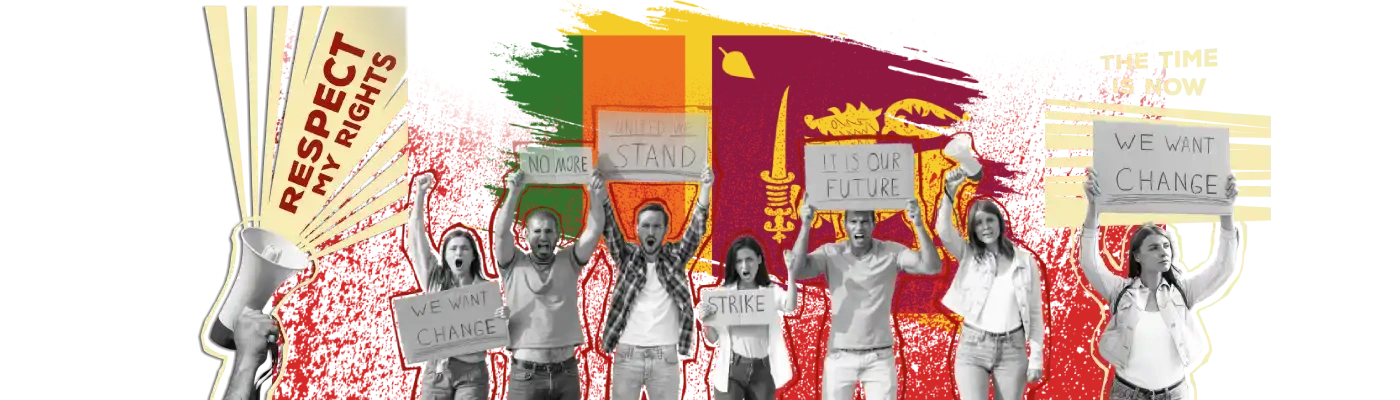
7. **Regulations on Public Assemblies**
– **Permits for Protests**: The requirement for permits for public gatherings can be used to restrict peaceful protests, limiting the ability of citizens to express dissent.
– **Use of Force**: Authorities may impose restrictions on the timing and location of protests, and the use of force against demonstrators can further suppress free expression.
8. **Media Licensing and Ownership Regulations**
– **Control over Media Outlets**: The government can control media ownership and licensing, allowing it to limit the number of independent voices in the media landscape.
– **Censorship of Foreign Media**: Restrictions on foreign media operations can limit the availability of diverse perspectives and critical reporting.
The legal measures employed by the Sri Lankan government to limit freedom of expression include a combination of broad and vague laws, emergency regulations, and punitive measures against dissent. These laws create an environment where individuals and media outlets may feel compelled to self-censor, stifling open dialogue and hindering the promotion of human rights. Recognising and addressing these legal challenges is essential for fostering a more open and democratic society in Sri Lanka.